
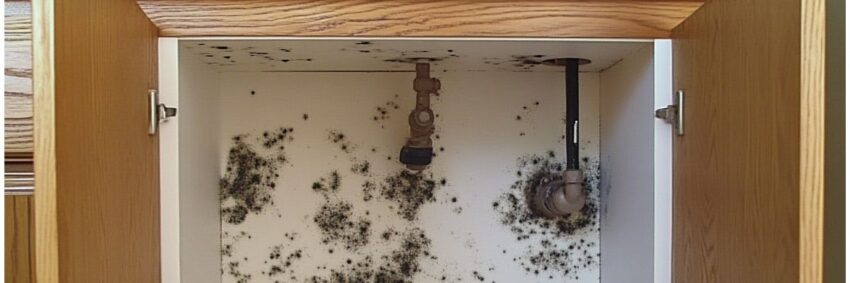
To clean mold from under the sink, you’ll need to identify the moisture source, apply a mold-killing solution like white vinegar or baking soda, scrub the area thoroughly, and ensure the space is completely dry afterward. The rest of this guide will walk you through each step in detail so you can confidently take control of the situation.
Essential Tools and Materials
Before you begin cleaning, make sure you’re properly prepared. You’ll need a few key items: protective gloves, an N95 mask, and safety goggles to shield yourself from airborne spores. Use a spray bottle, sponge or scrub brush, and absorbent towels. White vinegar and baking soda are highly effective natural mold-killers. You may also want to have hydrogen peroxide on hand for tougher spots. A trash bag will be needed to discard any mold-contaminated items during the cleanup.
Step-by-Step Mold Removal Process
1. Ensure Safety First
Begin by putting on all protective gear and ventilating the area. Open nearby windows or use a fan to circulate air, which helps disperse any mold spores you might stir up. Mold can spread through the air, so protecting your lungs, eyes, and skin is essential during this process.
2. Identify and Fix Moisture Sources
Mold cannot grow without moisture, so the first step in any effective cleanup is stopping the source of the problem. Inspect the pipes under your sink for leaks, condensation, or loose fittings. If you find a problem, tighten the plumbing or call a plumber to repair it. Even a small drip can sustain a mold colony over time.
3. Remove Items and Assess Damage
Clear out everything stored under your sink. Anything visibly covered in mold—like old rags, sponges, or particleboard organizers—should be tossed immediately. If your cabinet base has absorbed moisture and feels soft or warped, it may need to be replaced. Once the area is clear, you’ll have a better idea of how severe the mold is.
4. Apply Cleaning Solution
Now that the space is dry and cleared out, spray the affected areas with white vinegar and let it sit for at least an hour. Vinegar breaks down mold at the root, preventing regrowth. For more stubborn spots, use a baking soda paste (mixing it with a bit of water) and scrub the area thoroughly. If you’re dealing with black mold or mold that has stained the surface, hydrogen peroxide can be a more aggressive alternative—but always test a small area first, especially on wood or laminate.
5. Rinse and Dry
Once the mold is scrubbed away, use a damp cloth to wipe down the surfaces. You want to remove any remaining residue from the cleaning agents. Then use dry towels to soak up excess moisture, and allow the area to air-dry completely before placing anything back inside the cabinet.
Preventing Future Mold Growth
The best way to stop mold from returning is to keep the area under your sink clean, dry, and well-ventilated. Check regularly for signs of leaks or condensation around pipes. Avoid storing damp cleaning cloths or sponges in this space, as they can create humidity. Keep the cabinet doors slightly open when possible to promote airflow, or consider installing a moisture-absorbing product like silica gel or a small dehumidifier.
It’s also a good idea to inspect the area periodically—especially after heavy use of your kitchen or bathroom sink. Early detection is the key to preventing mold infestations.
When to Seek Professional Help
Sometimes, mold grows beyond what homeowners can safely handle. If the mold covers more than 10 square feet, has soaked into wood or drywall, or continues to return after cleaning, it’s time to call in a mold remediation professional. Strong musty odors or signs of mold in adjacent rooms may also indicate a deeper issue that needs expert evaluation.
Professional mold removal companies use specialized equipment and containment methods to eliminate mold at the source and prevent it from spreading. They can also assess the cause and help ensure your home stays safe and mold-free going forward.
Protect your home from Mold Today
Mold under the sink is a common household issue, but it’s one that shouldn’t be ignored. Left unchecked, it can compromise your health and your home. By taking swift action, using the right cleaning techniques, and staying vigilant about moisture control, you can protect your space and your family. If you’re dealing with a serious mold problem, or if you want peace of mind that your home is safe, don’t hesitate to reach out to the experts at First and Last Restoration. We’re here to help you restore comfort and cleanliness—right where it matters most.